
AI Is Changing How Tourists Discover Malaysia
Why Malaysia Needs an AI Inbound Tourism Strategist
AI Is Changing How Tourists Discover Malaysia
For many years, tourists discovered destinations through travel agents, brochures, travel fairs, Google searches and online travel agencies.
Today, something important is changing.
Travellers are increasingly asking AI.
They may ask:
“What are the best local experiences in Malaysia?”
“What can I do in Perlis for one day?”
“Where can I experience authentic Malaysian village life?”
“What should I do after arriving at KLIA?”
“Recommend a family experience in Langkawi.”
AI is becoming another front door to tourism.
And this creates both an opportunity and a challenge for Malaysia’s inbound tourism industry.
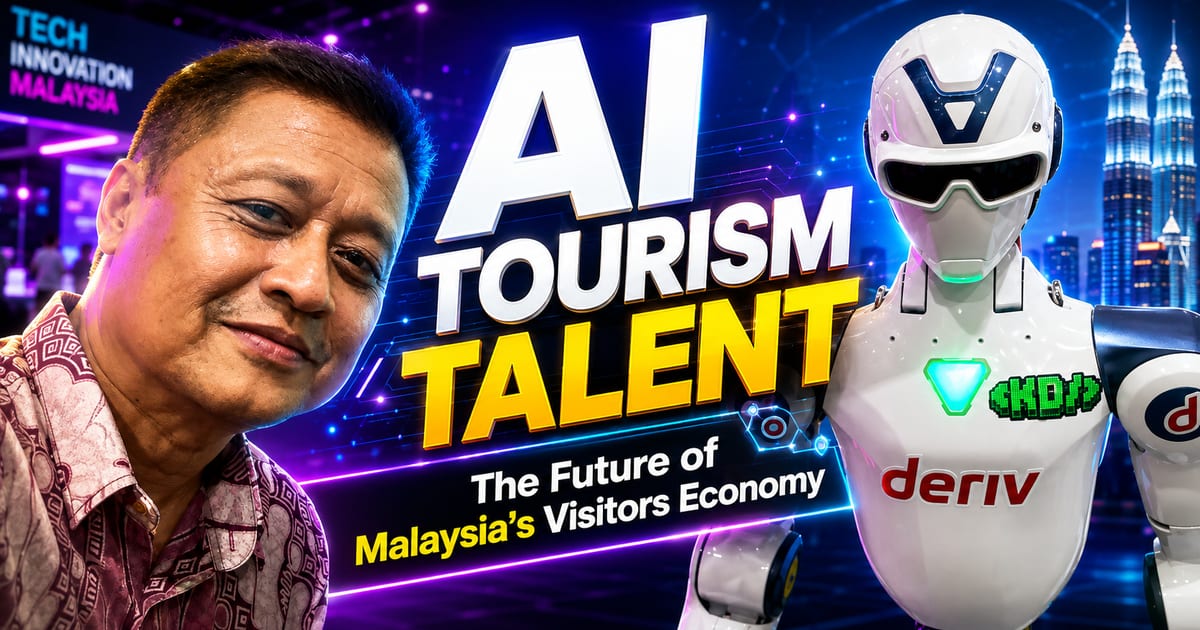
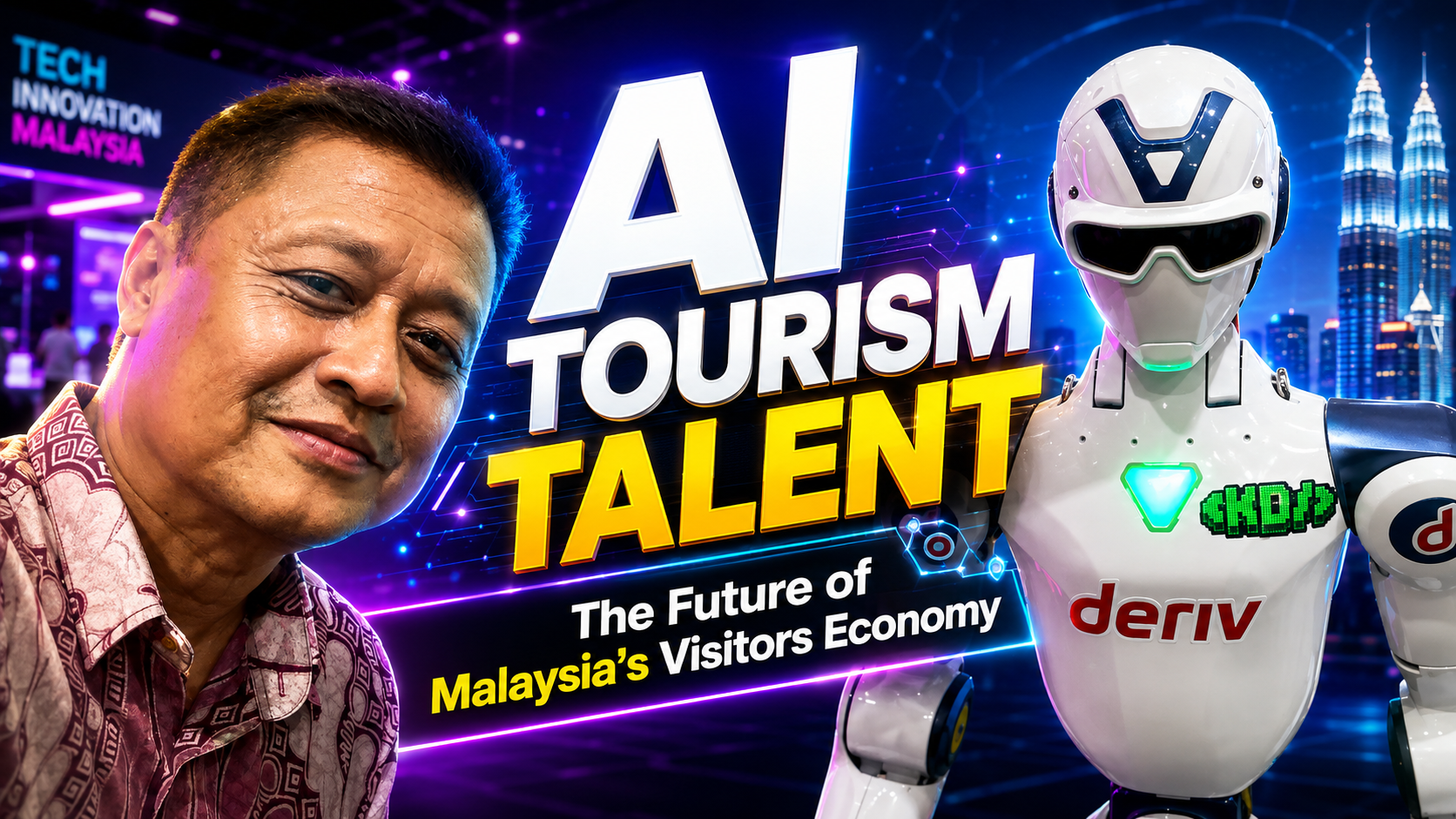
My name is Uzaidi Udanis, and I describe my role today as an AI Inbound Tourism Strategist.
My focus is simple:
Helping tourism businesses become visible, bookable and AI-ready.
What Is an AI Inbound Tourism Strategist?
An AI Inbound Tourism Strategist is not necessarily an AI engineer.
I do not believe every tourism operator needs to learn how to build artificial intelligence.
But tourism businesses must learn how to use AI commercially.
An AI Inbound Tourism Strategist looks at questions such as:
Can travellers find your business?
Can AI understand what you sell?
Can travellers trust your business?
Can they see your products clearly?
Can they book immediately?
Can you generate leads instead of simply collecting followers?
Can AI help you understand your customers and improve your sales?
That is where AI becomes useful to tourism.
Technology should eventually create economic value.
Tourism Has a Visibility Problem
Malaysia has thousands of excellent tourism businesses.
We have:
tour operators
travel agencies
homestays
hotels
resorts
attractions
tourist guides
restaurants
transport providers
adventure operators
community tourism operators
craftsmen
farmers
fishermen
local storytellers
Many have excellent products.
But having an excellent tourism product is no longer enough.
If tourists cannot discover it digitally, the product becomes almost invisible to the international market.
A tourism business may exist physically for 20 years.
But digitally, it may barely exist.
This is one of the biggest challenges facing small and medium-sized tourism businesses today.
From Tourism Asset to Bookable Experience
Malaysia does not lack tourism assets.
We have plenty.
Take a paddy field.
A paddy field is beautiful.
But by itself, it is an asset.
Now imagine we create:
A Paddy Field Sunrise Experience
The visitor meets a local host.
Walks through the village.
Learns how rice is grown.
Meets a farmer.
Drinks traditional tea.
Learns a local story.
Has breakfast with the community.
Takes photographs.
And books everything online before arriving.
Now the asset has become an experience.
More importantly, it has become a bookable experience.
AI can help tourism entrepreneurs develop the name, positioning, itinerary, description, customer segment, FAQs, marketing content and sales funnel.
But the experience itself must still come from the people and the destination.
That combination is powerful.
Human experience + local knowledge + AI capability.
AI Should Help Tourism Businesses Generate Revenue
There is a danger that we turn AI into another seminar topic.
Tourism operators attend a workshop.
They learn prompts.
They take photographs.
They receive a certificate.
Then everyone goes home.
Nothing changes.
For me, that is not enough.
The real question should be:
Did AI help the tourism business generate an enquiry?
Did it create a booking?
Did it improve productivity?
Did it help the company reach a new market?
Did it increase visitor spending?
That is why my approach to AI tourism focuses strongly on commercial outcomes.
The New Tourism Sales Funnel
Imagine a travel agent has one hotel voucher.
The traditional approach might be
Create a poster.
Post it on Facebook.
Post it on WhatsApp.
Wait.
Then post it again.
Instead, we can create an AI-assisted tourism sales funnel.
The process could look like this:
Tourism Product
↓
Customer Segmentation
↓
AI-Assisted Content
↓
Landing Page
↓
WhatsApp / Lead Capture
↓
Sales Follow-Up
↓
Booking
↓
Customer Data
↓
Retargeting & Referral
One tourism product can also be marketed from several angles.
A resort voucher, for example, could become:
Romantic Weekend Escape
Anniversary Getaway
Birthday Surprise
Parents Appreciation Gift
KLIA Stopover Experience
Weekend Family Escape
The product may remain the same.
The reason to buy changes.
AI can help tourism businesses identify and communicate those different reasons.
Tourism Businesses Need Digital Identification
I believe every tourism business should eventually have a strong digital identity.
Not merely a Facebook page.
Not merely a WhatsApp number.
Not merely an attractive poster.
A tourism business should have a digital presence that clearly explains:
Who are you?
Where are you?
What do you offer?
Who is your experience suitable for?
How much does it cost?
What is included?
When is it available?
What do customers say about you?
How can someone book?
This information helps humans.
It also gives search engines and AI systems better information to understand the business.
Three Questions Every Tourism Business Should Ask
I often encourage tourism entrepreneurs to ask themselves three simple questions.
1. Can AI Find Me?
Does your business have enough useful and consistent information online?
Do search engines understand what you do?
Can someone searching for your type of experience discover you?
2. Will AI Recommend Me?
Being online is different from being credible.
Your business needs clear information, useful content, strong customer feedback, accurate location information, good photography and a trustworthy digital presence.
No business can guarantee that an AI system will recommend it.
But businesses can improve the quality, clarity and accessibility of the information available about them.
3. Can Travellers Book Me Immediately?
This is perhaps the most important question.
Imagine AI successfully helps a traveller discover your experience.
The traveller becomes interested.
Then there is no price.
No availability.
No booking button.
No clear WhatsApp link.
No payment option.
The opportunity disappears.
Discovery should lead to action.
That is why I constantly use three words:
Visible. Bookable. AI-Ready.
AI and the Visitors Economy
I prefer looking beyond tourism arrivals alone.
I am interested in the visitors economy.
A successful destination should not only ask:
How many tourists arrived?
We should also ask:
Where did the visitor spend the money?
Did that spending benefit:
the local guide?
the restaurant?
the farmer?
the homestay?
the transport operator?
the craft maker?
the community?
the small tourism entrepreneur?
This is where local experiences become particularly important.
A visitor may sleep in a major hotel.
But during the day, that same visitor could join a cooking class, cycling experience, food trail, craft workshop, village walk or nature experience operated by local communities.
Tourism spending can therefore circulate more widely throughout the local economy.
AI Can Help Small Tourism Businesses Compete
Large companies have marketing departments.
Small businesses usually do not.
A small tourism entrepreneur may need to be:
the owner,
salesperson,
marketing manager,
customer service manager,
content creator,
tour guide,
accountant,
and sometimes the driver.
That is precisely why AI can be valuable.
AI can help a small operator:
generate marketing ideas,
write product descriptions,
create social-media content,
respond to common questions,
analyse customer enquiries,
prepare quotations,
develop itineraries,
translate content,
identify target markets,
and improve sales funnels.
AI does not remove the importance of the entrepreneur.
It can increase the entrepreneur’s capability.
Malaysia Needs AI-Powered Tourism Entrepreneurs
When people discuss Malaysia’s AI talent shortage, the conversation naturally includes programmers, engineers, data scientists and technical specialists.
They are important.
But the visitors economy needs another category of talent.
People who know how to apply AI to real tourism businesses.
I call them:
AI Tourism Growth Managers
AI Experience Creators
AI Visitors Economy Specialists
AI Inbound Tourism Strategists
Imagine a young graduate supporting five tourism SMEs.
They help each company:
digitalise its products,
create landing pages,
improve digital visibility,
build AI-assisted content,
develop bookable experiences,
manage distribution,
generate leads,
analyse customer behaviour,
and improve conversion.
If 2,000 trained people supported five businesses each, potentially 10,000 tourism SMEs could receive practical digital assistance.
That is how AI begins to reach the everyday economy.
My Mission as an AI Inbound Tourism Strategist
I have spent decades working in inbound tourism.
Today, my interest is increasingly focused on one question:
How can we use AI and digital technology to help smaller tourism businesses participate successfully in the global visitors economy?
Through Your Inbound Matters, my focus is on helping tourism players understand that the future is not simply about adopting another piece of software.
It is about becoming:
discoverable,
credible,
bookable,
connected,
and AI-ready.
Technology is only the tool.
The objective is economic opportunity.
From AI Technology to Local Economic Impact
Malaysia’s AI story should not end inside data centres.
It should reach the kampung.
It should reach the island.
It should reach the travel agency.
It should reach the homestay.
It should reach the tourist guide.
It should reach the restaurant.
It should reach the young entrepreneur creating his or her first tourism experience.
Because ultimately, successful AI adoption should create something tangible.
More productivity.
More business opportunities.
More bookings.
More entrepreneurs.
More visitor spending.
More local economic participation.
That is the AI transformation I want to see in Malaysia’s tourism industry.
And perhaps the question every inbound tourism player should start asking today is very simple:
Can AI find me?
Then:
Can the traveller book me?
Because in the new visitors economy, being a great tourism business is important.
But if nobody can discover what you offer, your opportunity becomes much smaller.
The future of inbound tourism will belong to businesses that combine great human experiences with strong digital visibility.
That is what being AI-ready should mean.
About Uzaidi Udanis
Uzaidi Udanis is an AI Inbound Tourism Strategist and founder of Your Inbound Matters, an independent platform focused on shaping the future of inbound tourism through AI, digitalisation, education, networking and innovation.
His current work focuses on helping tourism businesses and destinations become visible, bookable and AI-ready, while using tourism and the visitors economy to create stronger opportunities for local businesses and communities.
Experience Creates Economy™